
Early Use and Origins of Asbestos in Australia
The history of asbestos can be dated back to prehistoric times. While the lineage is long, the popularity of asbestos exploded in Australia during the 20th century when it became a popular, cost-effective choice for builders.
Since then, the devastating material has been linked to thousands of deaths across the country. But where did it start, and how have the regulations evolved? Take a look at Australia’s long and complicated history with asbestos.
Asbestos was first introduced into Australia back in the early 1900s. However, studies suggest that asbestos had been a regular in manufacturing materials in the 1800s in other parts of the world. By the 1930s, unprocessed asbestos was regularly imported into Australia to meet a high demand for industrial and construction materials.
Asbestos was a favoured material during the post-war construction boom, as it was durable, heat-resistant, fireproof, cheap, and readily available. The nature of asbestos fibres meant they could be easily woven into other materials to strengthen them.
Following the unveiling of new technologies using steam, kerosene, and electricity, there was an abundance of catastrophic fire hazards that the construction industry was woefully underprepared for. Asbestos was seen as the miracle material when first introduced due to its strength, low thermal conductivity and ability to fireproof buildings and other materials.
The History of Asbestos in Australia – Where Was it Used?
Asbestos was also used in Australia for insulation of machines, tapes, cloths, gaskets and seals, and brake linings for cars. For the most part, asbestos was used and mixed with cement for building construction, for a solid 50-year period – right up until the 1980s. The most commonly used asbestos was chrysotile asbestos (white asbestos), followed by crocidolite (blue asbestos) and amosite (brown asbestos).
Asbestos in Residential Construction
Houses built in Australia in the 1940s-1960s were predominantly constructed with tile or asbestos-cement sheet roofing. When mixed with cement, asbestos is easy to mould and malleable, making it ideal for corrugated roofing. It was a popular roofing choice in the form of asbestos cement sheets or planks as it was durable, easy to install and somewhat fireproof.
Asbestos in Interior Products and Finishes
During the 1950s, asbestos materials were a popular addition to home interiors in the form of spray coatings and textured decorative coatings on ceilings and walls. Vinyl sheet coverings, or “lino” flooring, were also quite popular and were made with a chrysotile paper backing. Other common asbestos-containing products during this period were vinyl-asbestos flooring tiles, roofing membranes and spray-on fire protection.
Asbestos in Australia in Comparison
Compared with other industrialised countries, the asbestos industry in Australia remained more active well into the 1960s, 1970s and 1980s. During this period, asbestos consumption continued to grow and exceed that of many other nations, with Australia eventually becoming known for having the highest per capita asbestos consumption in the world.
The History of Asbestos Mining in Australia
Asbestos has also left a significant mark on Australia because of its long history of asbestos mining. The presence of asbestos was first discovered in the 1930s in Wittenoom, Western Australia, where an entire town was eventually established to accommodate the growing crocidolite mining community. During the 1950s and 1960s, Wittenoom was the largest supplier of crocidolite, and Australia played a huge role in exporting and importing asbestos worldwide.
However, the growing health hazards and eventual lack of profit were enough to have the dangerous site shut down in 1966. Other asbestos mines, including Baryulgiul and Woodsreef, were finally shut down in the 1970s and early 1980s.
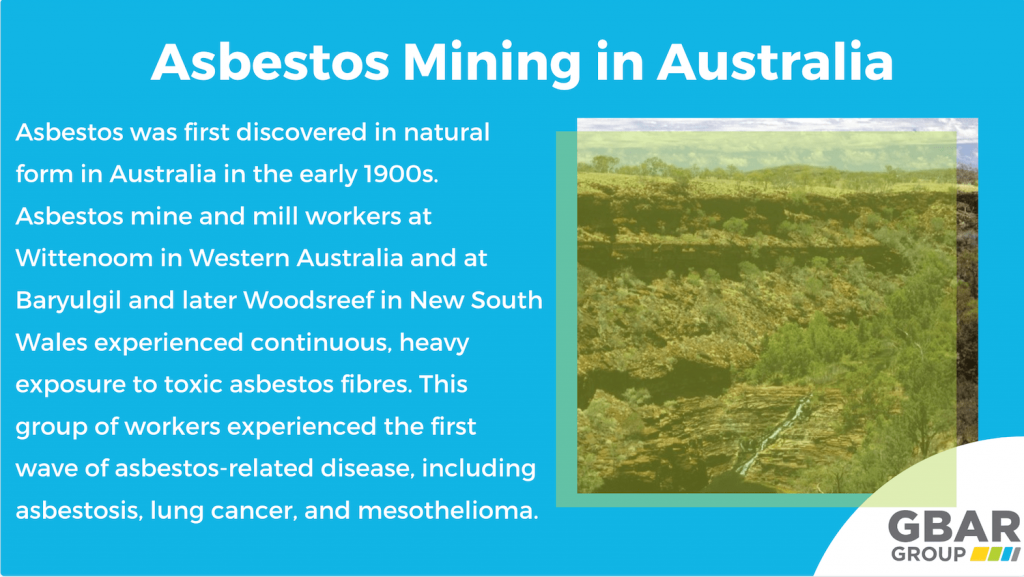
Asbestos workers who worked at these mines experienced prolonged and heavy asbestos exposure and were among the first groups of people to experience the first wave of asbestos-related disease, including asbestosis, lung cancer, and mesothelioma.
The History of Asbestos Health Regulations in Australia
Today, the risks associated with handling asbestos are well-documented, and various steps have been implemented to protect workers and the general population from its health implications. However, it wasn’t until the 1990s that asbestos in Australia was taken seriously as a health concern. According to WorkSafe Australia, asbestos is the single biggest cause of work-related deaths. Asbestos-related illnesses contribute to over 4,000 Australian lives lost every year.
The Rise of Asbestos Exposure
The introduction of power tools on building sites in Australia during the 1950s and 1960s marked the beginning of significant asbestos dust exposure. When asbestos-containing materials are disturbed, cut, sanded, or broken, toxic fibres are released into the air. Once inhaled, these fibres can lodge deep within the lungs, where they become trapped and do not break down or disintegrate over time.
The Health Impacts of Asbestos
Asbestos exposure is directly linked to serious diseases, including asbestosis, mesothelioma, lung cancer, and pleural plaques. In many cases, asbestos-related illnesses do not appear until decades after exposure, and by the time symptoms emerge, treatment options are often limited.
The Path to Regulation and Ban
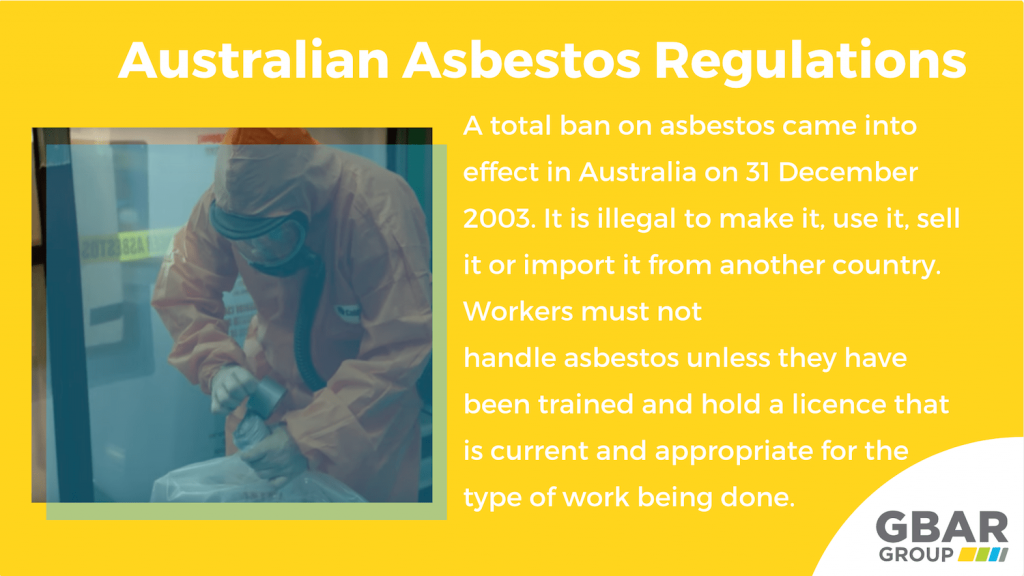
The first regulations on asbestos were put into place in Australia in 1978. That being said, common forms of asbestos were still being imported, used and mixed up until the 2000s. Since the nationwide ban in 2003, asbestos use has been strictly regulated throughout Australia.
Asbestos Use in Australia Today
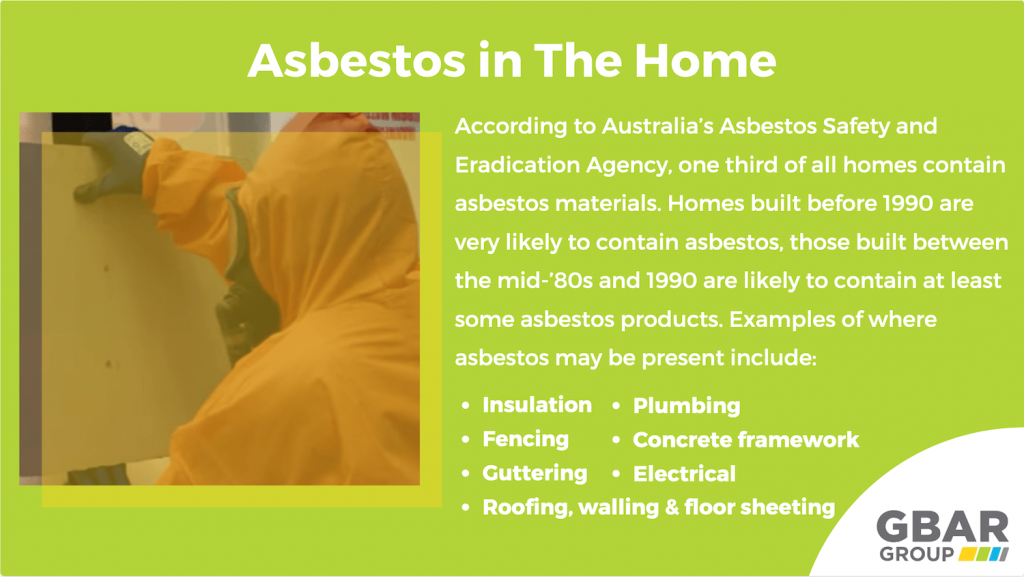
The problem we now face in Australia is the abundance of asbestos materials we are now left with from past construction work. Asbestos is difficult to identify and can be nearly impossible for the average homeowner to spot without testing. However, if the house was built before 1990, it’s likely to contain the toxic material somewhere.
It’s often very difficult to know what contains asbestos and what is safe. Unless each product or material is clearly labelled, it can be impossible to tell without sampling the material and having it properly tested. There are many places around the home where asbestos is commonly found, such as walls,ceilings,vinyl floors, gutters, pipes, insulation, and fireproof seals. However, WorkSafe strongly advises against homeowners investigating any suspected asbestos materials without the help of a licensed asbestos surveyor.
Is It Worth Buying a Property Full of Asbestos?
Despite the extensive use of asbestos across the country, buying a property built with asbestos can be perfectly fine. That said, it’s best to approach it with clear eyes and realistic expectations.
From a legal point of view, buying and selling a property that contains asbestos is common across Australia and is not, in itself, an issue. Asbestos materials are permitted to remain in place if they are in good condition, sealed, and not disturbed. Many older homes are legally occupied every day, with asbestos still present.
What Are the Complications of Buying a Property With Asbestos?
Where the problems arise is during maintenance, renovation, or demolition. Once asbestos is involved, even relatively minor works become more complex. A leaking asbestos roof, for example, can’t simply be patched or repaired, and in most cases, it must be fully removed and replaced by a licensed asbestos removalist. The same applies to wall linings, eaves, ceilings, flooring backings, and other products. Labour, disposal, compliance paperwork, and replacement materials all add up quickly.
Cost is also highly variable. Isolated removal jobs can be a few thousand dollars, but widespread asbestos throughout walls, roofs, and internal structures can make partial renovations not really worth it. Sometimes, a full demolition and rebuild is cheaper than staged asbestos removal.
Before committing to purchase, the best step is an asbestos survey carried out by a licensed specialist. This identifies exactly where asbestos is present, what type it is, and how it can be safely managed or removed.
In short, asbestos doesn’t automatically make a property a bad buy. But the purchase price discount needs to genuinely reflect the cost, complexity, and long-term limitations that come with it.
Need Professional Asbestos Advice?
The GBAR Group is pleased to deliver safe, affordable, and premium-quality asbestos removal services to the Sydney, Brisbane, and Wollongong areas. We carry the appropriate licensing, experience and knowledge to carry out all forms of asbestos management. We’re here to remove the risk for you and your family.